Shopify vs WooCommerce is a comparison between a fully hosted ecommerce platform and a self-hosted solution built on WordPress. In 2026, Shopify is best for businesses that want fast setup, built-in hosting, and minimal technical management. WooCommerce, on the other hand, offers greater flexibility, customization, and SEO control but requires managing hosting, plugins, and updates. If ease of use and stability matter most, Shopify is ideal. If long-term scalability and content-driven growth are priorities, WooCommerce is the better choice.
Table of Contents
Shopify vs. WooCommerce
Shopify and WooCommerce are two of the most widely used ecommerce platforms worldwide and among Malaysian businesses. Both power millions of online stores, but they are built on fundamentally different approaches to running an online business.
Shopify is a fully hosted, subscription based platform offered as software as a service. It provides an all in one solution that handles hosting, security, and technical maintenance for you.
WooCommerce, by contrast, is a free and open source plugin that turns a self hosted WordPress website into a fully functional online store.
In this guide, we compare Shopify and WooCommerce side by side to help Malaysian sellers determine which platform best suits their business goals and technical requirements.
Overview of Each Platform
Here is a quick overview of the two leading ecommerce solutions, Shopify vs. WooCommerce
Shopify Malaysia
Shopify is a fully hosted ecommerce platform that is widely used for its ease of use and comprehensive feature set. As a software as a service platform, Shopify provides a hassle free experience that allows businesses to launch an online store quickly without the need to manage hosting, security, or system maintenance.
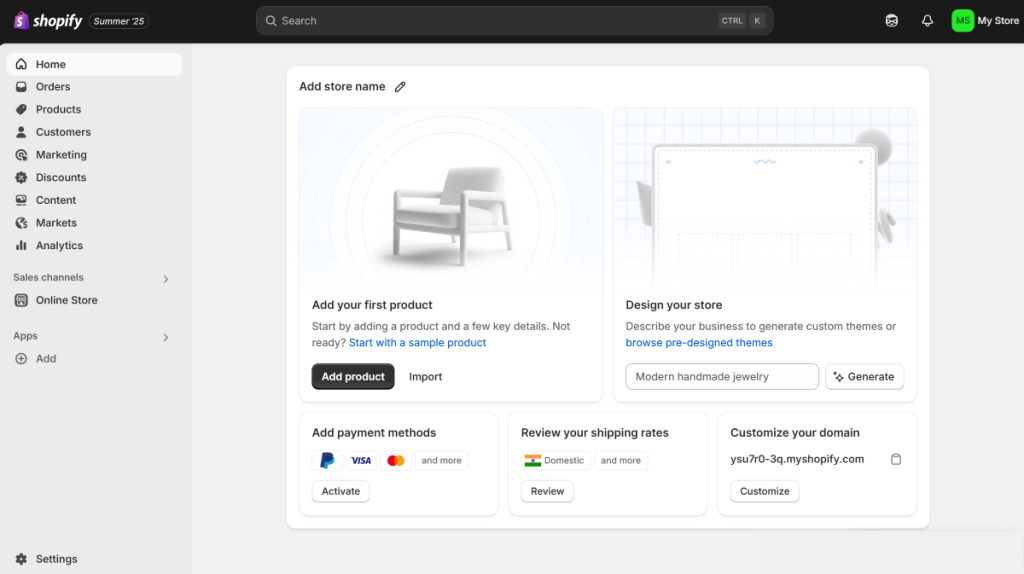
Key features of Shopify
- Drag and drop website builder
- Integrated payment gateways
- Mobile responsive store designs
- 24/7 customer support
- Large app marketplace for added functionality
Shopify is especially well suited for small to medium sized businesses that want to go online quickly and operate with minimal technical involvement. Its intuitive interface makes it easy for users with limited technical knowledge to build a professional and reliable online store.
WooCommerce (WordPress)
WooCommerce is a self hosted ecommerce plugin built on top of WordPress. It offers a high level of flexibility and customisation, making it a popular choice for businesses that want greater control over their store’s design, features, and overall functionality.
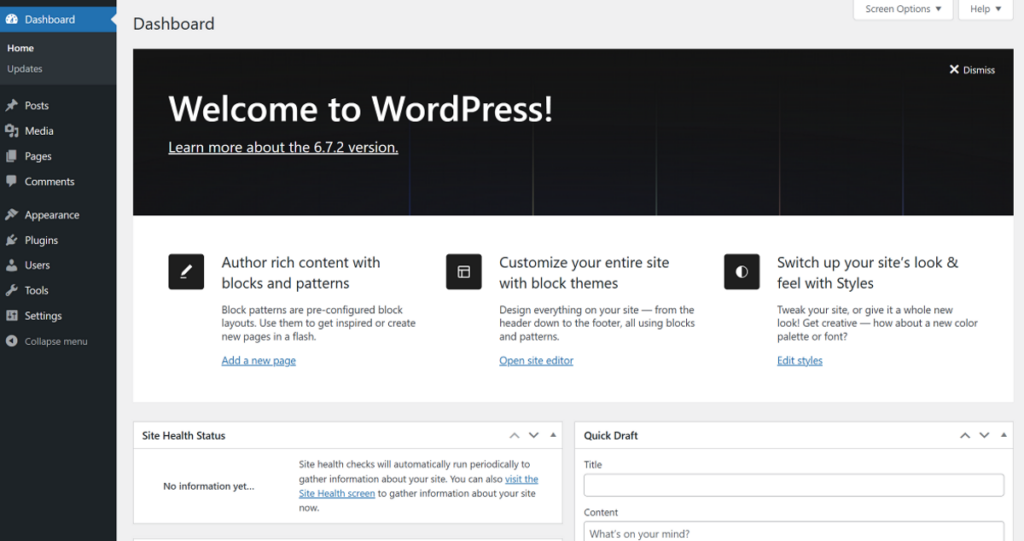
Key features of WooCommerce
- Highly customisable and flexible setup
- Native integration with WordPress
- Extensive plugin ecosystem
- Full control over store design and layout
- Open source platform
WooCommerce is ideal for businesses that want a tailored ecommerce solution and are comfortable managing a self hosted website or working with a technical team. Its open source nature allows for deep customisation, making it well suited for businesses with specific or complex requirements.
Shopify vs. WooCommerce – Key Comparison
Both Shopify and WooCommerce power thousands of online stores in Malaysia, but their approaches to ecommerce are fundamentally different. Here is how they compare.
| Feature | Shopify | WooCommerce (WordPress) |
| Type | Fully hosted SaaS | Open source ecommerce plugin for WordPress |
| Ease of Setup | Quick setup, user-friendly, no coding | Requires hosting + WordPress knowledge, more steps |
| Cost | Monthly subscription + app/transaction fees | Free plugin, mandatory costs for hosting/domain/theme/plugins |
| Design & Themes | Shopify Theme Store (premium focus) | Large WordPress themes + WooCommerce themes (free/paid) |
| Payment Options | Shopify Payments (not in MY) + 3rd-party (like Billplz, PayPal, etc) | Wide support for Malaysian and global gateways including Stripe, and PayPal |
| Scalability | High, managed hosting & infrastructure | Highly scalable but performance depends on hosting quality and optimisation |
| Security | Built-in SSL, PCI compliant, managed by Shopify | Requires the user to manage hosting security & updates |
| Customization | Limited without coding, depends on the theme structure | Extremely flexible, full control over code and themes |
| Support | 24/7 official Shopify support | Community-driven + hosting provider support |
1. Pricing & costs
Shopify uses a tiered monthly subscription model. Additional transaction fees apply if you do not use Shopify Payments or if it is unavailable in your region, such as Malaysia. Merchants should also budget for paid apps to add specific features. Pricing is predictable and includes web hosting.
WooCommerce itself is free to use, but you must pay separately for a domain name, web hosting, SSL, and any premium themes or plugins. While initial costs can be lower, scaling a WooCommerce store may introduce added complexity and ongoing expenses.
2. Ease of use
Shopify is fundamentally designed for the non-technical user. Its setup process is a simple step-by-step wizard, and its dashboard is intuitive for daily store management. It offers a fast route to market.
WooCommerce requires more technical familiarity, primarily with setting up and managing a WordPress site and web hosting. The initial setup time is longer due to the multiple steps (installing WordPress, installing WooCommerce, and setting up hosting).
However, for anyone already comfortable with the WordPress interface, the daily management is flexible.
3. Design & customization
Shopify gives access to the Shopify Theme Store, which offers high quality and conversion focused templates. These pre built themes are designed for ecommerce but are more restrictive when it comes to deep customisation. Most changes are made through a drag and drop editor, with limited backend control unless advanced coding is used.
WooCommerce provides complete and unlimited customisation. You can choose from thousands of WordPress and WooCommerce themes and modify every part of your store using custom code or page builders such as Elementor.
4. Payment gateways
In Malaysia, Shopify relies on third party payment providers such as Stripe and PayPal for payment processing. Since Shopify Payments is not available in Malaysia, merchants must use external gateways, which can lead to additional transaction fees.
WooCommerce benefits from its open source structure and supports most major Malaysian payment gateways. This allows merchants to accept local payment methods such as FPX, DuitNow, and popular e wallet options directly. The flexibility makes it easier to choose providers with competitive pricing and suitable features.
5. Marketing & SEO tools
Shopify includes solid built in SEO features such as automatic sitemap generation and customisable meta tags. It also offers a large app marketplace for marketing tools. However, its blogging and content management features are relatively basic.
WooCommerce runs on WordPress, which is widely regarded as one of the most SEO friendly content management systems. Merchants can use powerful plugins such as Yoast SEO or RankMath, making WooCommerce a stronger choice for businesses that rely on content driven strategies to generate organic traffic.
6. Scalability & performance
Shopify manages scalability automatically. Its fully managed infrastructure is built to handle large traffic spikes, such as during major sales events, without requiring merchants to manage servers or performance settings.
WooCommerce is also highly scalable, but performance depends entirely on the quality of the web hosting and how well the store is configured and optimised. High traffic WooCommerce stores typically require premium managed hosting, effective caching, and ongoing maintenance to ensure reliable performance.
7. Seller & buyer experience
Shopify is known for its fast and streamlined checkout experience. The user interface is consistent, mobile optimised, and designed to deliver high conversion rates across all stores.
WooCommerce offers greater flexibility, but both the seller and customer experience depend heavily on the selected theme, plugins, and overall setup quality.
A well built WooCommerce store can match or even exceed Shopify’s user experience. However, a poorly configured setup may lead to slower load times and a more complex checkout process.
Which is better for your business: Shopify or WooCommerce?
Choosing between the two ultimately depends on your resources, business goals, and level of technical expertise.

Choose Shopify if:
- You want to launch quickly with minimal technical setup.
- You prefer hosted security, managed updates, and reliable performance.
- You have little or no technical experience and do not want to manage hosting or maintenance.
- Your main focus is transactional ecommerce rather than content driven marketing.
Choose WooCommerce if:
- You want full control and flexibility over every part of your store.
- You are comfortable managing a WordPress site and web hosting, or you have access to technical support.
- You plan to run a content heavy marketing strategy alongside ecommerce.
- You want the option for lower long term costs and prefer to fully own your platform.
Also read: 10 Best Ecommerce WordPress Themes for Online Stores (2025 Guide)
Start Your WordPress Website Today!
Conclusion
There’s no one-size-fits-all solution. Shopify and WooCommerce serve different needs. Shopify focuses on convenience and fast launch capabilities, making it ideal for businesses that want to start selling quickly with minimal setup. WooCommerce, in contrast, excels in customization and long-term flexibility, especially for brands that prioritize content, SEO, and tailored user experiences.
Regardless of the platform you choose, the ultimate goal is the same: to sell effectively and grow sustainably.
Frequently Asked Questions (FAQ)
Is Shopify or WooCommerce better for small businesses in Malaysia?
Shopify is usually the better choice for very small businesses, solopreneurs, and micro businesses because it is easy to set up, includes hosting, and requires minimal technical effort. WooCommerce is often a better option for small businesses that can invest in quality hosting and want more control and flexibility as their store grows.
Which is cheaper Shopify or WooCommerce?
WooCommerce can be cheaper at the start, but long term costs depend on hosting quality and plugin usage. Shopify offers predictable monthly pricing, but costs in Malaysia can be higher due to limited native payment options and additional transaction fees.
Which platform is better for SEO Shopify or WooCommerce?
WooCommerce, when used with WordPress, is generally considered better for SEO. This is because WordPress offers stronger content management capabilities and access to powerful SEO plugins such as Yoast SEO and RankMath. Shopify includes solid built in SEO features, but its content and blogging tools are more limited in comparison.
Visit our page if you need more details.
Also Read: