
Most e-commerce websites fail because they focus on launching a store instead of building a complete customer journey. In 2026, common reasons include poor online marketing, low search visibility, high cart abandonment, confusing checkout processes, weak customer support, and lack of post-purchase engagement. Successful e-commerce websites avoid these mistakes by investing in SEO, improving user experience, building trust, and optimising conversions at every stage. Fixing these issues early significantly increases the chances of long-term e-commerce success.
Table of Contents
Picture this: you launch your e-commerce store in Malaysia with big hopes, but sales are slow and visitors leave without buying. Frustrating, right? Unfortunately, this is very common. Around 80–90% of e-commerce websites fail within their first few years, often due to weak marketing, poor strategy, and a frustrating user experience. This is the harsh reality behind why many online stores struggle, and it usually comes down to issues in website design, planning, and execution.
The good news is, your store doesn’t have to be part of that statistic. With smart e-commerce website design and the right digital marketing strategy, you can attract the right audience, keep them engaged, and turn visitors into loyal customers.
In this blog, we’ll explore the common reasons e-commerce businesses fail and show you how to design an e-commerce website in Malaysia that stands out and grows sustainably.
Why 80% of E-commerce Websites Fail and How to Avoid It
Many people wonder why e-commerce stores fail even when they have good products and a working website. The truth is, most failures come from overlooked basics like marketing, visibility, and user experience. This is why the e-commerce failure rate remains so high. When these fundamentals are ignored early on, even promising stores struggle to survive.
The good news is that your store doesn’t have to be part of that statistic. With the right strategy, design, and execution, you can build an e-commerce website that attracts customers, keeps them engaged, and converts them into loyal buyers.
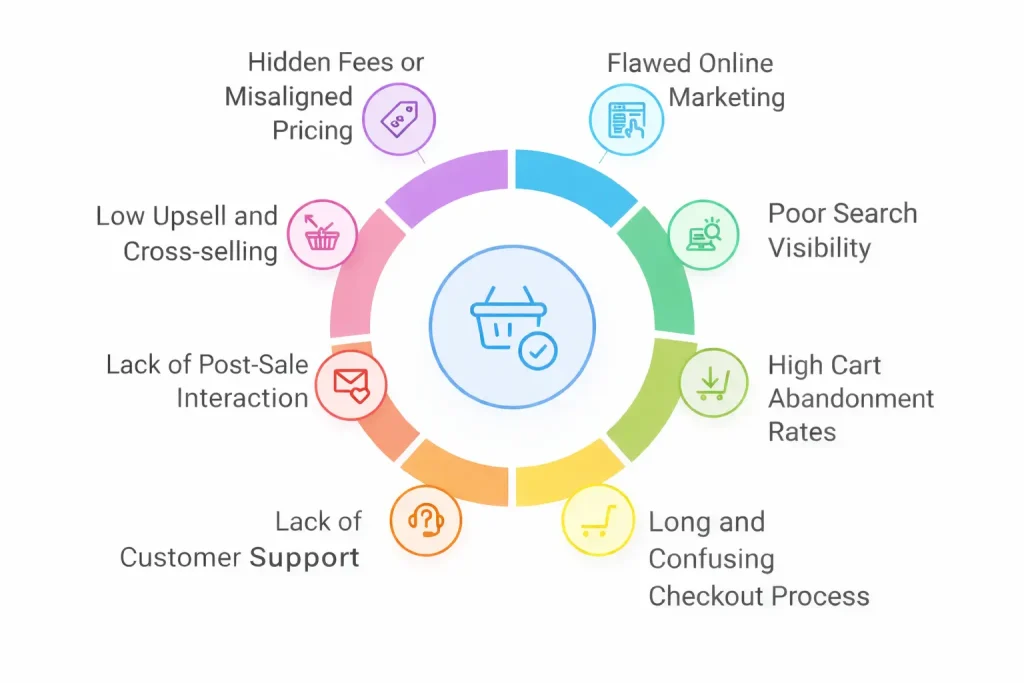
1. Poor Online Marketing
If customers don’t know your store exists, they can’t buy from you. Many e-commerce businesses fail simply because of weak marketing strategies, such as poorly targeted ads or an inactive social media presence. Even great products won’t sell without visibility.
How to fix it:
- Plan your marketing efforts around content and targeted advertising
- Stay active on social media platforms where your customers spend time
- Track performance and adjust campaigns based on real data
Strong marketing combined with professional e-commerce web design helps turn traffic into sales.
2. Low Search Visibility
A beautifully designed e-commerce website means nothing if customers can’t find it on Google. Most shoppers start with search, and if your site doesn’t appear, you’re losing sales to competitors.
How to fix it:
- Invest in SEO and optimize for relevant keywords
- Publish quality content like blogs, guides, and videos
- Improve technical performance such as site speed, mobile usability, and structure
Good SEO ensures your store is visible, accessible, and competitive.
3. High Cart Abandonment Rates
Getting visitors to your site is one thing. Getting them to complete a purchase is another. Hidden costs, confusing checkout steps, and limited payment options are common reasons shoppers abandon their carts.
How to fix it:
- Simplify the checkout process and allow guest checkout
- Be transparent about shipping costs, taxes, and fees
- Offer multiple payment options
A smooth checkout experience significantly reduces abandonment.
4. Long or Confusing Checkout Process
One of the biggest reasons shoppers abandon carts is a checkout process that feels too long or complicated. Frustrated users rarely stick around.
How to fix it:
- Reduce unnecessary form fields and steps
- Use autofill where possible
- Show a clear progress indicator
A fast, intuitive checkout encourages customers to finish their purchase.
5. Lack of Customer Support
When customers have questions or issues, they expect quick answers. Poor or hard-to-reach support can damage trust and hurt your brand.
How to fix it:
- Offer live chat or instant messaging
- Create a clear and helpful FAQ page
- Provide multiple support channels such as email, chat, or phone
Good support shows customers you care and increases repeat purchases.
6. No Post-Purchase Engagement
Many e-commerce businesses focus only on the first sale and forget about building long-term relationships. Post-sale engagement is key to customer loyalty.
How to fix it:
- Send thank-you emails and request feedback
- Offer loyalty programs or exclusive rewards
- Stay connected through email marketing
Strong post-purchase engagement turns one-time buyers into repeat customers.
7. Weak Upselling and Cross-Selling
Many stores miss out on revenue by not using upsell and cross-sell strategies effectively. This leaves a lot of potential income on the table.
How to fix it:
- Recommend complementary or upgraded products during checkout
- Add sections like “Frequently Bought Together” or “You May Also Like”
These tactics increase order value while improving the shopping experience.
8. Hidden Fees or Inconsistent Pricing
Unexpected charges are a major turn-off. Hidden fees or mismatched pricing between ads and product pages quickly destroy trust.
How to fix it:
- Show all costs clearly upfront
- Make sure ad pricing matches landing page pricing
Transparent pricing builds confidence and improves conversions.
9. Poor Product Listings
Low-quality images, weak descriptions, and missing details reduce trust and sales. Product pages are your sales pitch—make them count.
How to fix it:
- Use high-quality images from multiple angles
- Write clear, detailed product descriptions
- Include customer reviews and ratings
Strong product pages are a core part of successful e-commerce web design.
Conclusion
E-commerce success is not about luck. It comes from understanding what goes wrong and fixing the basics early. Every small improvement you make, whether it is speeding up your website, simplifying checkout, or improving search visibility, brings you closer to real growth and further away from becoming another failed store.
If your website is slow, confusing, or poorly designed, customers will leave quickly and most of them will not come back. These are some of the biggest reasons e-commerce stores fail, and the good news is that they can be avoided. With the right strategy, clear design, and a focus on user experience, your e-commerce website can convert better, keep customers coming back, and grow with confidence.
Frequently Asked Questions
Why do most e-commerce websites fail early?
Around 80% of e-commerce websites fail due to weak marketing, poor search visibility, high cart abandonment, and lack of customer support. When these basics are ignored early, sales struggle. Fixing these issues from the start can greatly increase the chances of success.
How can I reduce cart abandonment on my e-commerce store?
Simplify the checkout process, offer multiple payment options, be clear about all costs, and allow guest checkout. A smooth and simple checkout experience encourages customers to complete their purchase.
What strategies can help an e-commerce website succeed?
Focus on SEO to increase visibility, build trust with clear pricing and strong product pages, provide fast customer support, and stay engaged after purchase through follow-ups, email marketing, and loyalty programs.
Visit our page if you need more details.
Also Read: