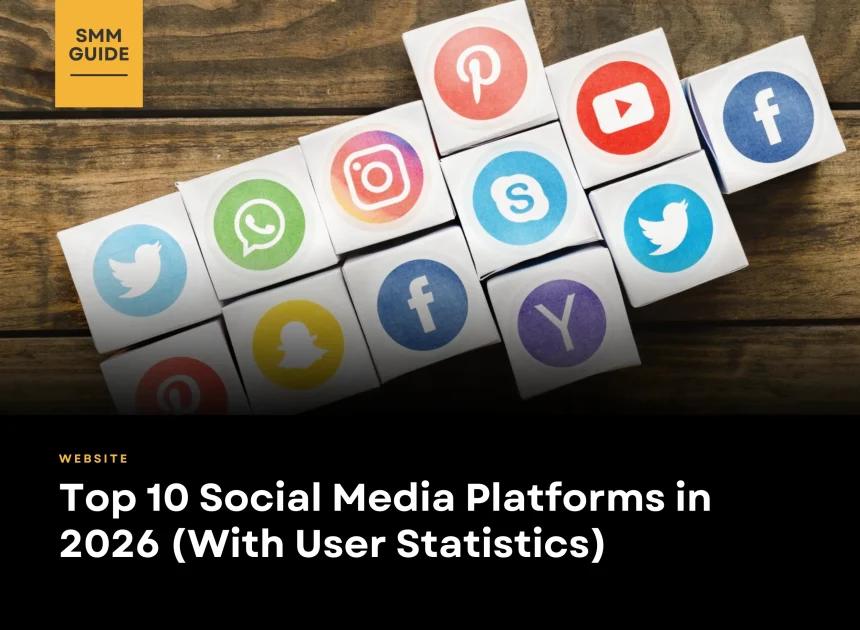
The top 10 social media platforms in 2026 (by global scale and marketing relevance) are Facebook, YouTube, Instagram, WhatsApp, TikTok, WeChat, LinkedIn, Telegram, Snapchat, and X. In Malaysia, the “best” platform depends on your goal: brand awareness (YouTube/TikTok), trust + community (Facebook/Instagram), leads and customer service (WhatsApp), and B2B pipeline (LinkedIn). Start by matching your audience and content format to each platform’s strength, then build a WhatsApp-first funnel for enquiries and bookings.
Table of Contents
Top 10 Social Media Platforms (2026)
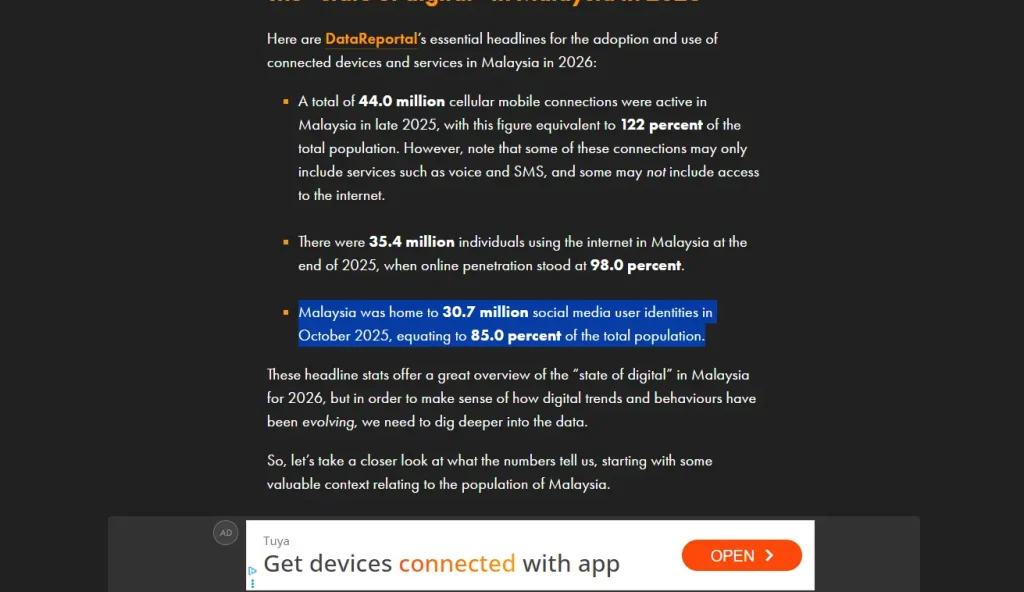
If you are doing marketing in Malaysia, platform choice is not about what is popular globally. It is about where Malaysians are actually active and how fast you can turn attention into real enquiries. According to the Digital 2026 Malaysia report by DataReportal, Malaysia has around 30.7 million social media user identities, which is about 85% of the population. This means most of your customers are already online.
The opportunity is huge, but only if you focus on the right platforms instead of trying to be everywhere at once. This guide breaks down the top 10 social media platforms based on active users, growth, and real marketing value, along with how each platform is best used today.
1. Facebook
Monthly active users: Around 3.1 billion worldwide
Strongest regions: Global reach, especially strong in Southeast Asia, Europe, and the Americas

Facebook remains the largest social media platform in the world. While younger users may spend more time on newer platforms, Facebook still dominates in overall reach, advertising power, and community engagement. For many businesses, it is still one of the most reliable platforms for running paid ads at scale and reaching a wide audience.
Businesses continue to rely on Facebook because of its detailed targeting options, strong retargeting features, and in depth analytics. It allows brands to track performance clearly and optimise campaigns based on real data.
Best use cases:
- Brand awareness and large scale reach
- Paid advertising and remarketing campaigns
- Community building through Facebook Groups
- Lead generation for both B2C and B2B businesses
2. YouTube
Monthly active users: Around 2.7 billion worldwide
Average daily watch time: Over 1 billion hours watched every day

YouTube is not just a social platform, it is also the second largest search engine in the world. People use it to learn, compare products, read reviews, and make buying decisions. It is especially powerful for products or services that require more explanation before customers commit.
Unlike short form platforms, YouTube videos can continue generating views and traffic for months or even years. This makes it ideal for evergreen content that supports long term visibility and search discovery.
Best use cases:
- Long form educational or informative videos
- Tutorials, reviews, and product demonstrations
- Video advertising campaigns
- SEO focused content that appears in search results
3. Instagram
Monthly active users: Around 2.4 billion worldwide
Engagement rate: Generally higher than Facebook across many content formats

Instagram is a highly visual platform that combines lifestyle content, influencer marketing, and ecommerce features. With tools like Reels, Stories, and in app Shopping, it is especially effective for product based brands that want to showcase visuals and build brand identity. Many users discover new products while browsing Instagram, making it a strong platform for brand exposure and buying inspiration.
Because the platform focuses heavily on images and short videos, brands that invest in strong visuals and creative storytelling tend to perform better.
Best use cases:
- Visual brand building and positioning
- Influencer and creator collaborations
- Ecommerce promotions and product launches
- Short form video content through Reels
4. WhatsApp
Monthly active users: Around 2.8 billion worldwide
Messages sent daily: Over 100 billion messages

WhatsApp is not a traditional content platform like Facebook or Instagram, but it plays a major role in customer communication. In many regions including Asia, it is one of the main ways people enquire, ask questions, and confirm purchases. It supports direct and fast conversations, which makes it powerful for turning interest into actual sales.
With WhatsApp Business, brands can automate replies, organise chats, manage customer support, and send order updates. It works like a simple CRM tool that keeps communication personal and efficient.
Best use cases:
- Customer support and retention
- Sales enquiries and follow ups
- Ongoing customer relationship management
- Conversational commerce and direct selling
5. TikTok
Monthly active users: Around 1.7 billion worldwide
Average session time: About 95 minutes per day, one of the highest globally

TikTok has changed the way people consume content with short, fast paced videos powered by a strong algorithm. Unlike many other platforms, follower count is less important than how relevant and engaging your content is. This gives new brands a real chance to reach large audiences organically if their content performs well.
In Southeast Asia, TikTok is also driving rapid growth in social commerce, with features like TikTok Shop and live selling becoming more common. It combines entertainment, education, and direct purchasing in one platform.
Best use cases:
- Viral brand discovery and awareness
- Product education through short videos
- TikTok Shop and live commerce
- Reaching Gen Z and Millennial audiences
6. WeChat
Monthly active users: Around 1.3 billion worldwide
Primary market: China

WeChat is more than a messaging app. It works as a super app that combines chat, payments, content publishing, ecommerce, and customer management in one ecosystem. For brands targeting the China market, WeChat is not just another platform, it is essential digital infrastructure.
Businesses can use WeChat to build official accounts, manage customer relationships, run promotions, process payments, and even create mini programs for ecommerce. It plays a central role in how consumers in China communicate and transact.
Best use cases:
- Entering and growing in the China market
- Social commerce and in app selling
- Customer relationship management
- Digital payments and loyalty programs
7. LinkedIn
Monthly active users: Around 1 billion worldwide
B2B lead effectiveness: On average, LinkedIn generates significantly higher quality B2B leads compared to many consumer platforms
LinkedIn is the leading platform for professionals, business owners, and decision makers. While it may not have the same entertainment driven engagement as other platforms, the quality of audience is much stronger for B2B marketing. Users are typically in a business mindset, making it ideal for services, consulting, corporate solutions, and high value offers.
Because of this professional environment, content that focuses on insights, case studies, and industry expertise tends to perform well and build credibility over time.
Best use cases:
- B2B lead generation
- Employer branding and recruitment
- Thought leadership and industry authority building
- Professional content marketing and networking
8. Telegram
Monthly active users: Around 900 million worldwide
Key advantage: Large broadcast channels and strong privacy focus

Telegram is popular for building communities and sharing content directly with followers. Unlike many other platforms, messages are not heavily controlled by algorithms, which means your subscribers are more likely to see what you post. It is often used by niche groups, tech communities, and brands that want direct communication with their audience.
With channels and groups, businesses can send updates, promotions, and announcements straight to members without relying on paid reach.
Best use cases:
- Community building and engagement
- Content broadcasting to subscribers
- Reaching niche or tech focused audiences
- Subscription style updates and announcements
9. Snapchat
Monthly active users: Around 800 million worldwide
Strongest demographic: Gen Z users

Snapchat is built around short lived content and interactive features like augmented reality filters and lenses. It is especially popular among younger audiences who prefer quick, personal, and visual communication. For brands targeting Gen Z, Snapchat can be effective for building awareness and creating fun, interactive experiences.
The platform works well for storytelling that feels casual and authentic rather than highly polished or corporate.
Best use cases:
- Campaigns targeting younger audiences
- Augmented reality filters and branded lenses
- Brand awareness initiatives
- Event based and limited time promotions
10. X
Monthly active users: Around 600 million worldwide
Strength: Real time conversations

X remains relevant for live discussions, trending topics, and public conversations. It is commonly used for news updates, opinions, and direct interaction between brands and audiences. While it is less focused on visuals compared to platforms like Instagram or TikTok, it is strong for communication that is timely and conversational.
For brands that want to respond quickly, share updates, or join public discussions, X can play an important supporting role in their overall digital strategy.
Best use cases:
- Real time updates and announcements
- Building brand voice and sharing opinions
- Customer engagement and quick responses
- News, media, and public facing industries
How to Choose the Right Social Media Platforms
Not every business needs to be active on every platform. In fact, spreading yourself too thin usually leads to weak results everywhere. The most effective social media strategies are built on fit, not volume. Fit between your audience behaviour, the type of content you can produce consistently, and your actual business goals.
Here is a more structured and practical way to choose the right platforms.
1. Start With Your Business Goal
Before choosing any platform, be clear about what you want social media to achieve.
Common goals include:
- Driving direct sales
- Generating leads
- Building brand awareness
- Supporting customer service
- Educating the market
Different platforms support different outcomes. Short form video platforms are strong for discovery and awareness, while professional networks are better for high quality leads.
2. Understand Where Your Audience Already Is
Your audience habits matter more than trends.
Ask yourself:
- Who is the main decision maker
- What is their age group
- Do they consume content casually or professionally
- Are they browsing for inspiration or looking to solve a specific problem
Younger audiences spend more time on short form video platforms. Professionals spend more time on career focused networks and long form educational content.
3. Match Content Format to Platform Strength
Every platform rewards different types of content. Choosing a platform that fits your content capability makes execution sustainable.
Video focused brands perform better on platforms that prioritise video.
Educational brands benefit from platforms that support long form content.
Community driven brands perform well on messaging and group based platforms.
If you cannot consistently produce the content style that a platform rewards, long term performance will suffer.
4. Platform Recommendations by Business Type
Ecommerce Brands
Best platforms:
- TikTok
Why they work:
- Strong visual discovery
- High product browsing behaviour
- Built in shopping features
- Strong paid advertising and retargeting performance
Instagram and TikTok are effective for product awareness and impulse buying. Facebook remains powerful for remarketing and scaling ads.
B2B Companies
Best platforms:
- YouTube
Why they work:
- Professional audiences with buying authority
- Higher quality leads
- Better support for longer decision cycles
LinkedIn supports lead generation and authority building. YouTube helps with education, demos, and trust building.
Customer Service Heavy Brands
Best platforms:
- Telegram
Why they work:
- Direct one to one communication
- Faster response expectations
- Stronger retention and trust
These platforms are powerful where customers expect real time updates and ongoing support.
Youth Focused Brands
Best platforms:
- TikTok
- Snapchat
Why they work:
- High daily usage among Gen Z
- Preference for authentic short form content
- Strong engagement with trends and creators
Younger audiences respond better to entertainment and authenticity rather than polished corporate messaging.
5. Focus on Fewer Platforms, Then Scale
A common mistake is trying to launch on too many platforms at once. A better approach is
- Start with one or two core platforms
- Test and learn what content performs
- Build simple internal systems
- Expand only when results are stable
Consistency beats presence. A strong and focused execution on two platforms will outperform weak activity across five.
Final Thoughts
Social media success is not about being on every platform. It is about being relevant, consistent, and strategic on the platforms that truly match your audience and business goals. When platform choice, content style, and conversion strategy are aligned, social media becomes a growth engine instead of just a posting routine.
At Duplex Ventures, we help brands turn social platforms into real revenue channels, not just content distribution spaces. Our digital marketing services focus on long term visibility and brand trust, while our paid social campaigns across TikTok Ads, Facebook Ads, and Instagram Ads are built for measurable results. Whether your goal is brand awareness, lead generation, or direct sales, we align platform strategy and ad execution to what actually moves your business forward. That is how social media marketing shifts from random posting to sustainable and scalable growth.
Start Growing on Social Media Today
Frequently Asked Questions
What are the top 10 social media platforms in 2026?
Facebook, YouTube, Instagram, WhatsApp, TikTok, WeChat, LinkedIn, Telegram, Snapchat, and X are commonly ranked as the top platforms based on user scale and marketing value.
Which social media platform is best for Malaysian SMEs?
Most Malaysian SMEs perform best with a simple setup. Use Facebook or TikTok to generate reach, Instagram to build brand proof, and WhatsApp to convert enquiries into customers.
Is Facebook still worth it in 2026?
Yes. Facebook remains effective for local services, community building, and retargeting campaigns, especially when you showcase real proof and guide users to WhatsApp enquiries.
Should I use all 10 platforms?
No. Focus on two platforms for growth and one for conversion. Trying to manage too many platforms often reduces consistency and results.
What is the fastest way to get leads from social media in Malaysia?
Create a clear offer with strong proof, use short form videos to capture attention, and direct all enquiries to Click to WhatsApp for faster response and higher conversion.
Visit our page if you need more details.
Also Read:
- Digital Marketing vs Traditional Marketing: Key Differences
- 8 Best Social Media Management Tools Reviewed In 2026
- What Is Social Media Marketing? A Complete Guide
- Top 10 Social Media Marketing Agencies in Malaysia (2026)
- 10 Benefits of Social Media Marketing for Businesses
- Digital Marketing Agency vs Freelancer in Malaysia (2026)
- Social Media Advertising vs. Social Media Marketing