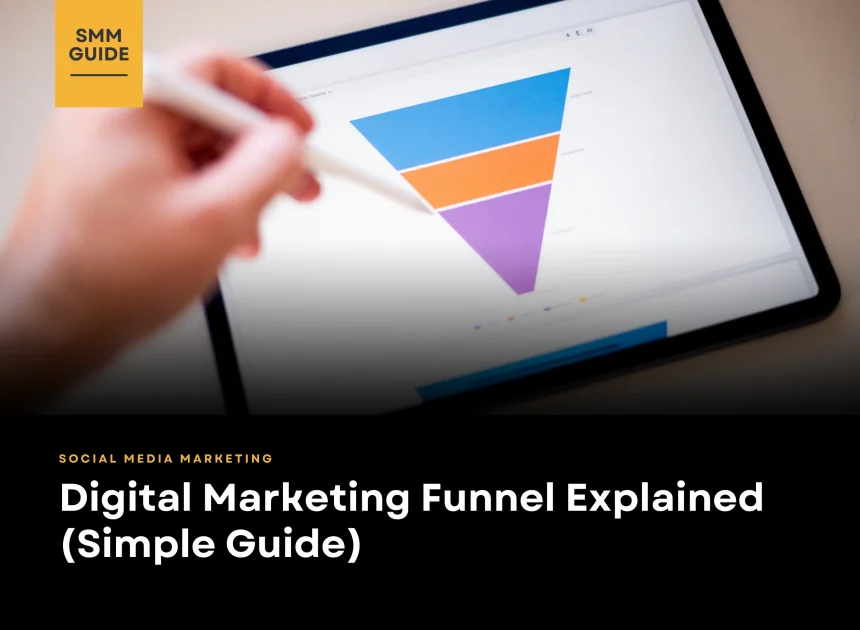
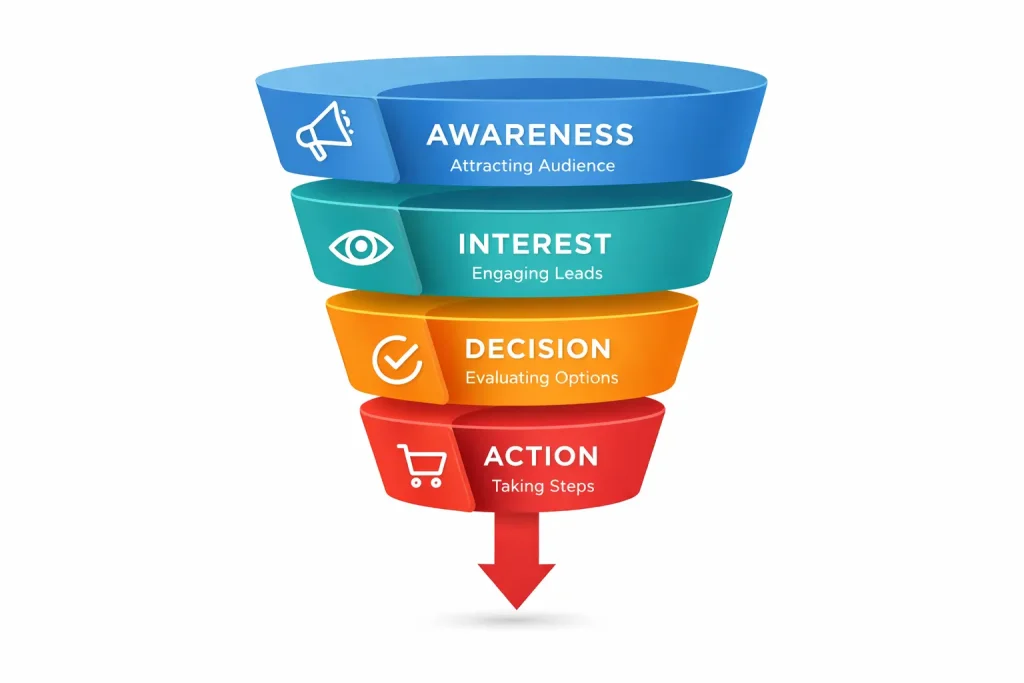
A digital marketing funnel is a step-by-step system that guides potential customers from awareness to conversion and loyalty. It typically includes four stages: Awareness, Interest, Decision, and Action. Instead of relying on random ads or content, businesses use a structured funnel to attract the right audience, nurture trust, and convert leads into paying customers. In 2026, a strong digital marketing funnel combines SEO, social media, paid ads, landing pages, and CRM automation to create measurable and scalable growth.
Table of Contents
You may have come across terms like TOF, MOF, and BOF, but what do they actually mean?
They refer to Top of the Funnel, Middle of the Funnel, and Bottom of the Funnel, which represent the key stages of a customer’s journey in digital marketing.
By aligning marketing strategies with each stage, businesses in Malaysia can engage audiences more effectively and achieve stronger overall results.
What Is a Digital Marketing Funnel
A digital marketing funnel represents the journey a customer takes before making a purchase. It shows how strangers first discover your brand, then become visitors, leads, customers, and eventually repeat buyers. The funnel shape illustrates that many people enter at the top, but only a smaller number move down to the final purchase stage.
Without a clear funnel strategy, marketing efforts can become random and inefficient. Businesses may attract traffic but fail to convert it into real sales, making it harder to achieve consistent growth.
Why the Digital Marketing Funnel Matters in 2026
Modern consumers rarely make purchases immediately. Instead, they research online, compare competitors, watch reviews, visit multiple websites, and often return later before deciding to buy. This extended decision process means businesses must stay visible throughout the entire journey.
A structured digital marketing funnel ensures your brand appears at every stage, from awareness to final conversion. In competitive markets like Malaysia, having a clear funnel system helps increase both visibility and conversion rates, making marketing efforts more strategic and effective.
The 4 Main Stages of a Digital Marketing Funnel
1. Awareness (Top of Funnel – TOF)
This is the stage where people first discover your brand for the very first time. They may not know your business, your services, or even that they have a problem that needs solving. At this point, your goal is visibility, not selling.
They may discover you when they:
- Search on Google
- See your social media post
- Watch a short video
- Click a blog article
At this stage, they are not ready to buy. They are exploring options, learning, and gathering information.
Awareness tools commonly used include:
- SEO blog content
- Short form video
- Social media posts
- Display ads
Goal: Attract attention and introduce your brand to new audiences.
2. Interest (Middle of Funnel – MOF)
Once awareness is created, the audience begins to show interest. They want to learn more about your business, your expertise, and whether your solution fits their needs. This is where education and trust building become critical.
They may:
- Download a guide or ebook
- Subscribe to your email list
- Follow your social media pages
- Visit multiple service pages
At this stage, trust begins to form as they evaluate your credibility.
Interest nurturing tools include:
- Educational blog content
- Case studies and success stories
- Email marketing sequences
- Retargeting advertisements
Goal: Build credibility, answer questions, and deepen engagement.
3. Decision (Bottom of Funnel – BOF)
At the decision stage, prospects are close to purchasing. They are actively comparing your business with competitors and evaluating value, pricing, and risk. Strong reassurance is needed to help them move forward.
They may:
- Request a quotation
- Read testimonials
- Compare pricing packages
- Contact your team directly
Your messaging must focus on reducing uncertainty and strengthening confidence.
Decision stage tools include:
- Clear pricing structures
- Strong customer testimonials
- Detailed FAQs
- Direct contact options such as WhatsApp CTA
Goal: Remove doubts and encourage commitment.
4. Action (Conversion Stage)
This is the point where the prospect becomes a customer. Your marketing funnel successfully converts interest into measurable business outcomes.
Conversion can take different forms such as:
- Product purchase
- Service sign up
- Appointment booking
- Consultation request
However, the funnel does not end after conversion. Retention and repeat business are equally important for long term growth.
Businesses should continue nurturing customers through:
- Follow up emails
- Loyalty programmes
- Upsell and cross sell offers
- Customer support engagement
Goal: Maximise customer lifetime value and drive repeat business.
How a Digital Marketing Funnel Works in Real Life
To understand how a digital marketing funnel works, let’s look at a simple real life example from a Malaysian business perspective.
Imagine a user searches for “digital marketing agency Malaysia” on Google. Your website appears in the search results, and they click to read your blog article. After finding the content useful, they download a free checklist or guide from your site. This action moves them from awareness into the interest stage.
Over the next few days, they receive follow up emails sharing more insights and case studies. They may also see your retargeting ads on social media or Google Display Network, reminding them about your services. Eventually, they click your ad, visit your service page again, and WhatsApp your business for more details. After a consultation, they decide to become your client.
This is a working digital marketing funnel, where each stage guides the prospect step by step from discovery to conversion.
Common Digital Marketing Funnel Mistakes
Many businesses invest in digital marketing but fail to see results because their funnel is incomplete or poorly structured. A digital marketing funnel only works when every stage is connected and supported by the right strategy.
Some of the most common funnel mistakes include:
- Running ads without directing traffic to a dedicated landing page
- Creating content without a clear call to action
- Failing to collect leads through forms or downloads
- Having no follow up system such as email nurturing
- Ignoring retargeting opportunities to re engage visitors
When these gaps exist, potential customers drop off before reaching the conversion stage. To generate consistent leads and sales, a funnel must be fully built, optimised, and aligned from awareness to action.
Digital Marketing Funnel vs Traditional Marketing
Traditional marketing campaigns often focus mainly on awareness. Businesses run TV ads, billboards, or print promotions to increase visibility, but the journey usually stops there without structured follow up. As a result, it is difficult to track engagement or guide prospects toward a purchase.
A digital marketing funnel, however, continues far beyond awareness. It moves prospects through multiple stages including engagement, lead nurturing, conversion, and long term retention. Each stage is supported by data tracking and automation, allowing businesses to build relationships and drive measurable results. This structured system is why digital marketing funnels consistently outperform random, one off campaigns.
Tools Used in a Digital Marketing Funnel
A strong digital marketing funnel is built using multiple tools that work together to guide prospects from discovery to conversion. Each tool supports a different stage of the funnel, ensuring the customer journey remains smooth and measurable.
Common funnel tools include:
- Website and dedicated landing pages to capture leads
- SEO strategy to drive organic traffic
- Social media content to build awareness and engagement
- Paid advertising to accelerate reach and targeting
- Email marketing automation to nurture prospects
- CRM systems to manage leads and customer relationships
- Analytics tracking to measure performance and optimise campaigns
When these tools are properly integrated, businesses can create a seamless funnel that improves both conversion rates and long term customer value.
Why Every Business Needs a Digital Marketing Funnel
A digital marketing funnel is essential for turning marketing efforts into consistent business results. Without a structured funnel, many businesses struggle to convert traffic into actual customers.
Without a funnel:
- Leads are lost along the journey
- Marketing activities become inconsistent
- ROI is difficult to track
- Business growth becomes unpredictable
With a funnel in place:
- Traffic is guided through a structured journey
- Conversion rates improve
- Follow ups can be automated
- Results become measurable and scalable
This is why a digital marketing funnel is no longer optional. In 2026, it has become a core system that supports sustainable marketing growth and long term business success.
Final Thoughts
A digital marketing funnel is more than just a marketing concept. It is a complete growth system that guides prospects from discovery to long term loyalty.
Businesses that structure their marketing around a funnel often achieve:
- Higher conversion rates
- Better customer retention
- More predictable revenue
- Stronger long term growth
In 2026, success is no longer about simply running ads. It is about building a structured system that turns traffic into customers and customers into repeat buyers.
Frequently Asked Questions
What is a digital marketing funnel?
A digital marketing funnel is a structured process that guides potential customers from discovering your brand to becoming paying clients. It typically includes awareness, interest, decision, and action stages.
Why is a digital marketing funnel important?
A digital marketing funnel ensures your marketing efforts are organised, measurable, and conversion-focused. Without a funnel, traffic may not convert effectively into leads or sales.
How many stages are in a digital marketing funnel?
Most digital marketing funnels include four main stages: Awareness, Interest, Decision, and Action. Some businesses add retention and loyalty stages after conversion.
What tools are used in a digital marketing funnel?
Common tools include SEO content, landing pages, social media marketing, paid ads, email automation, CRM systems, and analytics tracking platforms.
Is a digital marketing funnel only for large companies?
No. A digital marketing funnel is especially useful for SMEs because it helps structure marketing efforts, improve conversion rates, and maximise ROI with limited budgets.
What is the difference between a sales funnel and a digital marketing funnel?
A sales funnel focuses on closing deals, while a digital marketing funnel focuses on attracting, nurturing, and converting leads through online channels.
Visit our page if you need more details.
Also Read:
- Digital Marketing vs Traditional Marketing: Key Differences
- 8 Best Social Media Management Tools Reviewed In 2026
- What Is Social Media Marketing? A Complete Guide
- Top 10 Social Media Marketing Agencies in Malaysia (2026)
- 10 Benefits of Social Media Marketing for Businesses
- Digital Marketing Agency vs Freelancer in Malaysia (2026)
- Social Media Advertising vs. Social Media Marketing
Stay Connected: Website | Facebook | Instagram | TikTok | Lemon8 | Xiaohongshu
Share This Article: