GEO, or Generative Engine Optimization, is the practice of optimizing content so it can be understood, trusted, and cited by AI-powered search engines and generative systems. Unlike traditional SEO, which focuses on rankings and clicks, GEO focuses on making content AI-readable, authoritative, and contextually clear. In 2026, GEO helps brands appear in AI-generated answers, summaries, and recommendations by emphasizing structured content, entity clarity, expertise, and consistent signals across the web.
Table of Contents
Around 70% of Gen Z now turn to generative AI platforms when they want quick answers. That shift says a lot. If your audience is searching on AI tools, your business needs to show up there too.
This is where Generative Engine Optimization (GEO) comes in. GEO helps AI platforms understand your content and decide when to surface it in AI-generated answers. In simple terms, it helps your business stay relevant, reach new audiences, and drive engagement in an AI-first world.
GEO isn’t just about creating content for AI. It’s about understanding how AI processes information and making sure your content is clear, trustworthy, and easy for AI to use.
Whether you’re a startup or an established brand, adding GEO to your digital marketing strategy helps keep your business visible as search continues to evolve. Let’s look at how GEO can support long-term growth for your company.
What is GEO?
Generative Engine Optimization (GEO) is about making your content easier for both people and AI to understand and trust. Just like technical SEO, it also helps improve your visibility and rankings on Google.
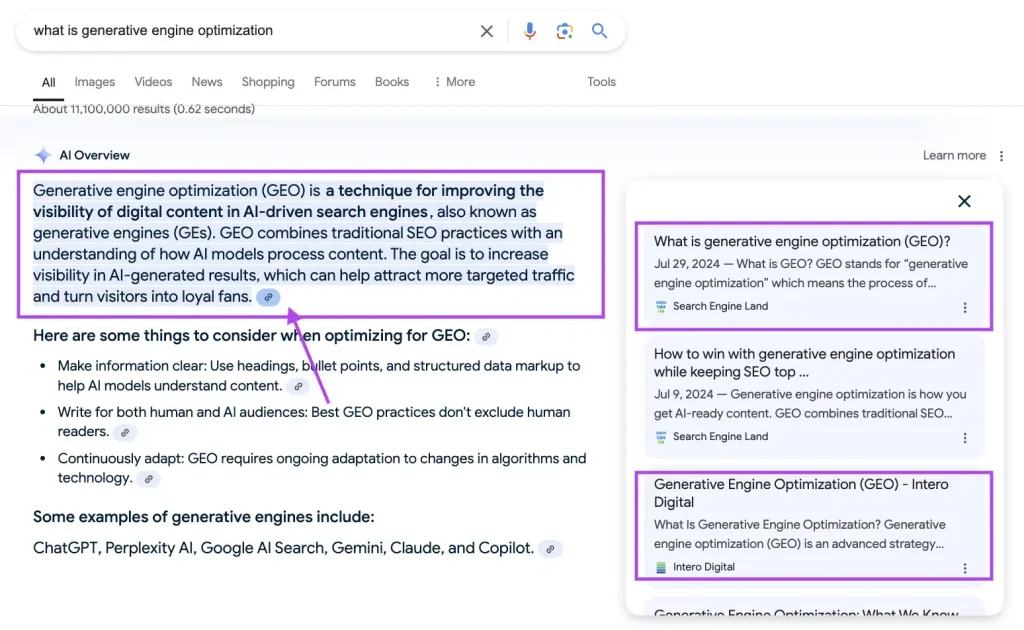
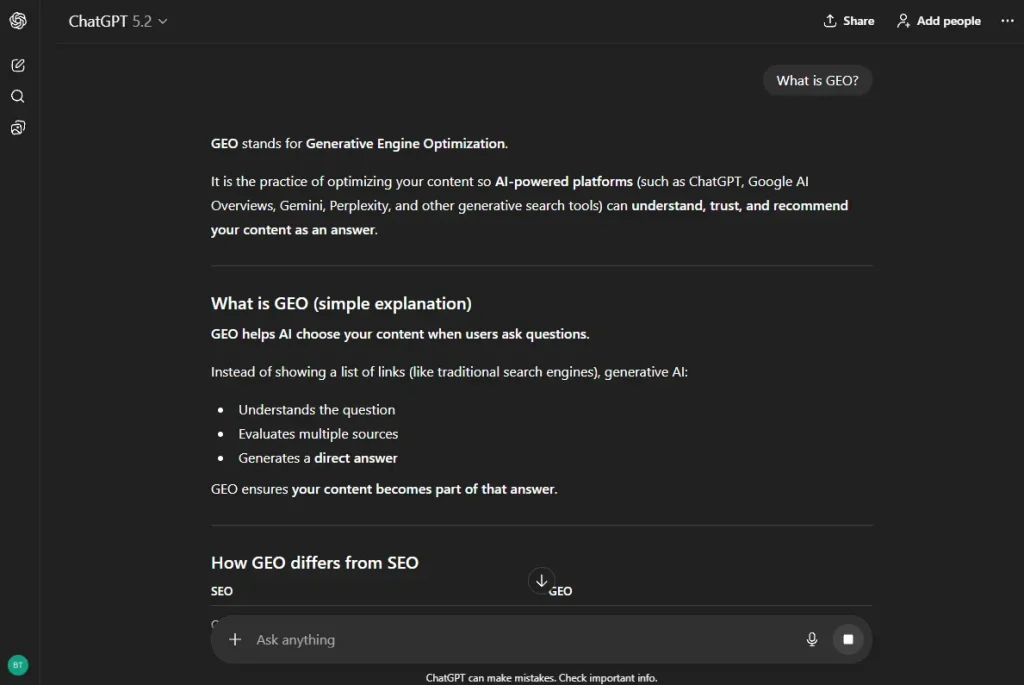
GEO makes your content easy for AI tools like ChatGPT and Google’s generative search to read and use. Instead of just showing links, these tools give users straight answers, and GEO helps your content become one of those answers.
For example, if you run a web and mobile app development agency, you already use service pages, blog posts, and case studies for SEO. With GEO, you organise that content in a clear, structured way so AI can quickly understand and summarise it.
So when someone asks an AI tool, “What’s the best way to build a mobile app?”, your content can appear as a helpful, step-by-step answer. This helps more people discover your business, even without clicking through search results.
Start GEO Optimization
GEO vs SEO
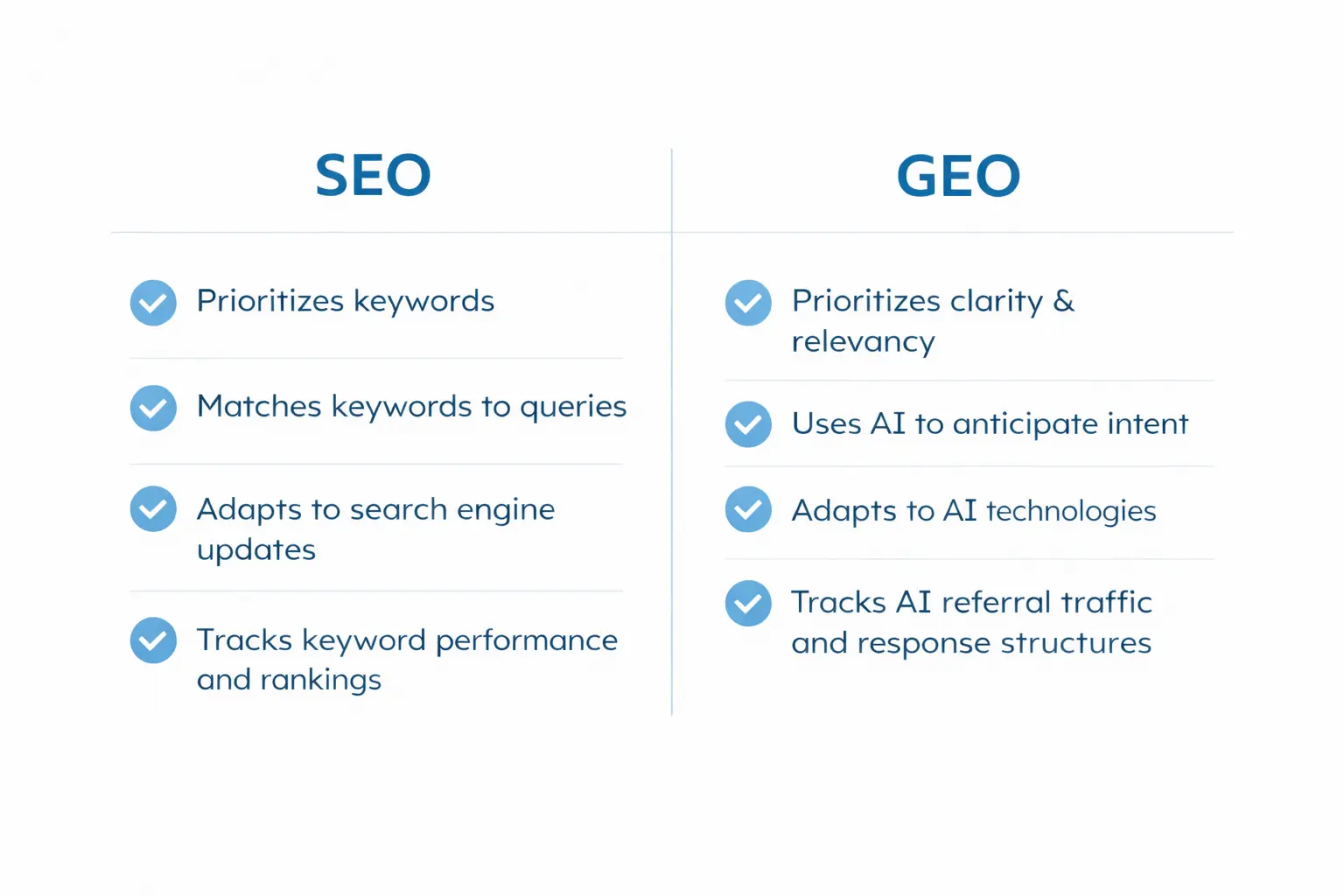
Understanding the difference between SEO and GEO helps you plan for both traditional search engines and AI-powered platforms.
Below is the key difference between GEO vs traditional SEO:
1. How People Search
SEO: With traditional search engines like Google, searches are more keyword-focused. To find the same information, users would typically type something shorter, such as: “best pet shop Cheras”

GEO: On generative AI platforms, searches are usually more conversational. Instead of typing keywords, users ask full questions like: “Where is the best pet shop in Cheras?” or “Which pet shop in Cheras has the best reviews?”
2. How Information Is Delivered
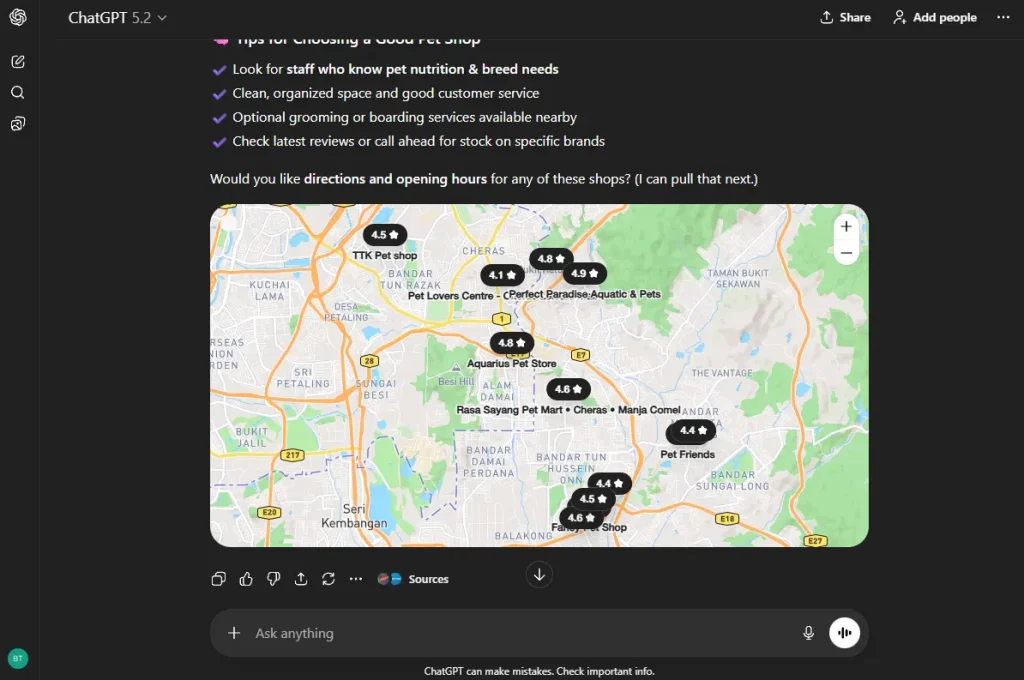
SEO: Search engines provide users with options for relevant information, which they may then choose and examine depending on what appears to be the most relevant. The main goal of SEO is to deliver a useful article or product listing that satisfies the search query requirements. The main aim is to get the page rank for a specific query. For example:
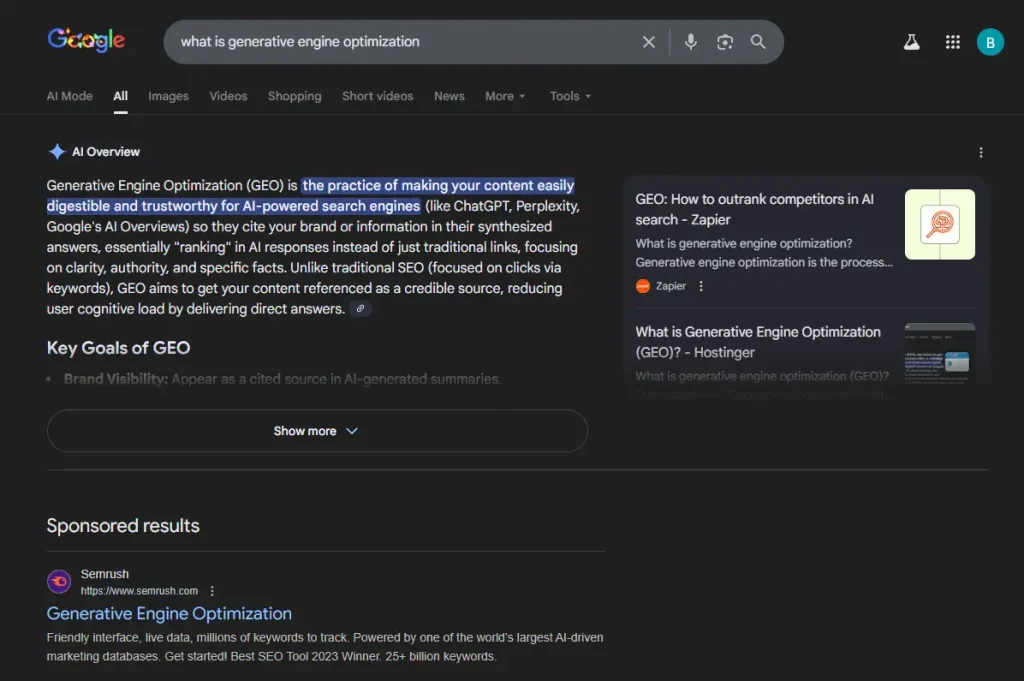
GEO: With Generative Engine Optimization, the goal is to give users a quick, clear answer. AI search tools summarize the topic and may include a source link. Instead of long lists of results, generative engines focus on short, direct answers that respond to the question immediately.
3. How Results Are Displayed
SEO: Traditional search engines like Google use complex ranking algorithms that look at factors such as keywords, backlinks, relevance, and overall site quality. User behaviour also matters. When visitors spend more time on your pages and engage with your content, it signals relevance and can help improve your search rankings.
GEO: In generative AI search, results are shown based on how relevant your information is, including keywords and brand mentions. How well your content appears also depends on how clearly your pages are structured. AI systems need to easily crawl, understand, and extract information from your site before deciding whether your content should be shown in AI-generated results.
How SEO & GEO Work Together?
SEO and GEO work best when they’re used together, not separately. SEO is still the foundation for online visibility, while GEO builds on top of it to help your content show up in AI-powered search results.
Both SEO and GEO share many of the same principles, like strong content, relevance, and good structure. When combined, they create a more powerful digital strategy that improves visibility across both traditional search engines and AI-driven platforms.
How to combine SEO and GEO effectively:
- Align SEO and GEO efforts. Using both together helps your brand stay visible in Google search results and AI-generated answers.
- Use one clear content strategy. High-quality content, smart keyword use, solid technical setup, and flexibility are essential as search continues to evolve.
- Think local and global. Applying GEO alongside local, national, and international SEO helps you reach regional searches, voice queries, and audiences across different markets.
Read more: What Is SEO and How Does It Work?
The Core Pillars of a Successful GEO Strategy
Generative Engine Optimization (GEO) works through a series of connected steps that help your content align with how AI-powered platforms understand and deliver information. Below is a clear breakdown of how GEO works in practice.
1. Research & Analysis with Generative AI
Research is the starting point of any GEO strategy. Instead of focusing only on traditional keywords, GEO research looks at how AI systems choose content, structure answers, and decide which sources to trust.
By understanding how AI platforms prioritize information, you can adjust your content to match their expectations.
Key areas to focus on include:
- Targeting long-tail and conversational keywords that people use when asking AI questions
- Identifying common questions and the response formats AI prefers, such as short paragraphs, lists, or summaries
- Studying competitors that frequently appear in AI-generated search results
- Understanding how AI platforms currently view and reference your brand
- Creating content that follows AI-friendly formats and structures
- Adapting as AI response styles and citation methods continue to evolve
2. Improving Content Quality & Relevance
GEO improves your content by aligning it with the signals AI uses to judge relevance and usefulness.
When creating or updating content, focus on:
- Answering real user questions clearly and directly
- Using related and semantically relevant keywords instead of keyword stuffing
- Providing complete and helpful explanations that AI can confidently summarize
- Writing content that is easy to read, such as guides, articles, and step-by-step formats
- Updating content regularly so it stays accurate and current
- Supporting claims with credible sources, expert input, or references
High-quality, relevant content is more likely to be selected and reused by AI-driven search tools.
3. Driving Distribution & Engagement
In GEO, visibility doesn’t stop at publishing content. AI systems also look at how content is shared, discussed, and trusted across the web.
To increase reach and engagement:
- Share content on platforms like Reddit and Quora where AI often pulls insights
- Encourage customer reviews, testimonials, and user-generated content
- Promote content on social media to increase visibility and interaction
- Build an active community that naturally creates fresh and relevant content
The more your content is discussed and referenced, the more signals AI receives that your brand is worth showing.
4. Strengthening Technical SEO
GEO works best when combined with strong technical SEO. AI systems still rely on clean, well-structured websites to access and understand content.
Important technical elements include:
- Proper use of HTML tags like titles, meta descriptions, and headings
- Mobile-friendly design for smooth experiences on all devices
- Fast loading speeds through image compression and code optimization
- Regular checks for crawling and indexing issues
- Secure HTTPS connections to build trust with both users and search engines
A technically healthy site makes it easier for AI systems to crawl, process, and rank your content.
5. Testing & Continuous Improvement
GEO is not a one-time setup. As AI platforms evolve, your strategy needs to evolve too.
To stay competitive:
- Test different content formats such as videos, visuals, and summaries
- Use A/B testing to see what content performs better in AI-driven results
- Track engagement and refine your strategy using real data
- Stay informed through industry blogs, webinars, and AI-focused communities
Continuous testing and improvement ensure your GEO strategy stays effective as AI search continues to change.
Why is GEO Non-Negotiable in 2025?
Generative Engine Optimization (GEO) is becoming essential as AI platforms change how people search and consume information. Here’s why GEO matters more than ever:

1. Organic search is changing fast
AI is reshaping how organic search works, forcing businesses to rethink their marketing approach. Gartner predicts traditional search volume will drop by 25%, and organic traffic could fall by more than 50% as users move toward AI-powered search. With nearly 80% of users expected to use AI search soon and most already trusting AI-generated answers, relying on SEO alone is no longer enough. GEO helps brands stay visible where attention is shifting.
2. People are searching differently now
More users are starting their searches directly on AI platforms for answers, product research, and buying decisions. ChatGPT alone has over 180 million monthly users, and tools like Perplexity AI are growing rapidly. This shows a clear shift toward AI as a trusted source for fast, accurate, and personalised information, making GEO critical for meeting users where they already are.
3. Trust and brand authority matter more than ever
In an AI-driven world, credibility is everything. GEO helps position your brand as a reliable source that AI platforms are confident referencing. Studies show that a large portion of Gen Z already trusts generative AI to help with decisions. Brands that appear consistently in AI-generated answers are seen as more modern, credible, and trustworthy.
4. Better data leads to better decisions
AI platforms rely heavily on data, and GEO helps businesses make better use of it. By understanding how users behave and what AI systems prioritise, brands can create content that matches real needs and expectations. With most marketers agreeing that data quality drives success, GEO plays a key role in aligning content with personalised, AI-driven recommendations.
In short, GEO is no longer optional. It’s how businesses stay visible, trusted, and relevant as search continues to move deeper into the AI era.
Conclusion
Generative Engine Optimization (GEO) is the next step in how search visibility works. In 2026, SEO helps people find and visit your website, AEO helps your brand show up as the clear answer to questions, and GEO makes sure AI systems understand and trust your content. Businesses that start using GEO early will not just rank on search engines, they will stay visible and relevant as search keeps moving toward AI driven answers.
Frequently Asked Questions
Is GEO replacing SEO?
No. GEO complements SEO. SEO builds traffic; GEO builds AI visibility.
Do I need new content for GEO?
Not necessarily. Existing content can be optimized with better structure, clarity, and authority signals.
Is GEO only for large brands?
No. Smaller brands with clear expertise can be cited by AI if their content is strong.
Can GEO increase traffic?
Indirectly. GEO increases brand exposure and trust, which can lead to more searches, clicks, and conversions.
Visit our page if you need more details.
Also Read:
- What is SEO and How Does it Work?
- What Is GEO? Generative Engine Optimization Explained (2026)
- WordPress SEO Plugins: The Best Tools to Improve Rankings in 2026
Stay Connected: Website | Facebook | Instagram | TikTok | Lemon8 | Xiaohongshu
Share This Article: